About VRF Air Conditioning PCB Board
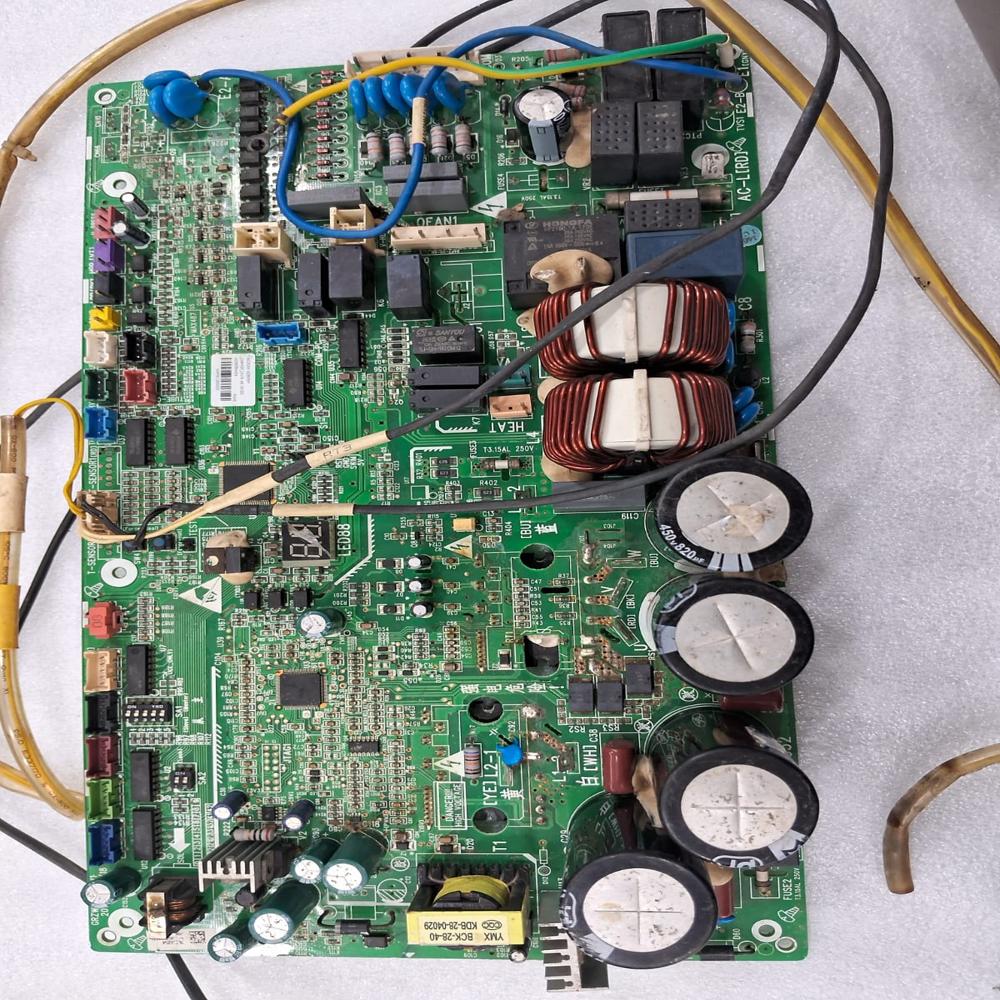
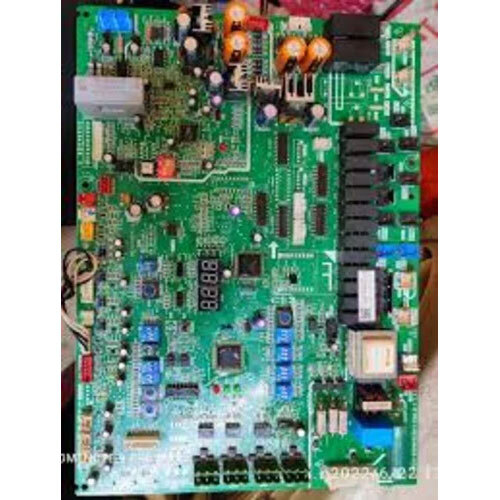
The VRF Outdoor Unit Main PCB is the central control board responsible for managing the operation of Variable Refrigerant Flow (VRF) air conditioning systems. It controls key functions such as compressor operation, outdoor fan motor control, electronic expansion valves, communication with indoor units, temperature monitoring, and system protection.
Designed with high-quality electronic components, the PCB ensures reliable performance, energy efficiency, and precise control of the entire VRF system. It continuously monitors system parameters and provides fault diagnostics for easy troubleshooting and maintenance.
Key Features:
- Controls compressor and outdoor fan operation
- Supports communication between indoor and outdoor units
- Monitors temperature, pressure, and protection sensors
- Built-in relay and power management circuits
- LED display for system status and fault codes
- High reliability and long service life
- Suitable for VRF/VRV outdoor air conditioning systems
Applications:
- Commercial buildings
- Offices
- Hotels
- Hospitals
- Shopping malls
- Industrial HVAC systems
This VRF Main PCB is an essential component for ensuring the safe, efficient, and reliable operation of VRF air conditioning systems. It is ideal for replacement, servicing, and maintenance of compatible outdoor units.
Advanced Features for Reliable PerformanceThis PCB board features integrated diagnostic LEDs, state-of-the-art microcontroller logic, and multi-level fan speed control for accurate cooling and heating. Engineered with multi-pin headers and screw terminals, it simplifies installations and connections for installers and technicians. The heatsink and coil design effectively dissipates heat, ensuring dependable operation even under intensive loads.
Versatile Compatibility Across SystemsCompatible with various capacity VRF units and inverter compressors-including DC Inverter, Scroll, and Screw types-this board supports both R410A, R32, and R22 refrigerants. Whether installed in imported, Indian, or Chinese VRF systems, the board serves as an adaptable solution for a wide range of residential, commercial, and industrial applications, enhancing energy efficiency and system flexibility.
FAQ's of VRF Air Conditioning PCB Board:
Q: How does the VRF Air Conditioning PCB Board enhance system control and efficiency?
A: The board implements advanced microcontroller logic and diagnostic LEDs to optimize HVAC performance. It streamlines control over compressors and fans, ensuring efficient cooling and heating while maintaining a low power consumption of under 30W. Integrated communication via RS485/Modbus protocol further enables seamless integration and system scalability.
Q: What is the installation process for this PCB board?
A: The board is designed for panel or chassis mounting in both outdoor and indoor VRF units. It connects directly to the AC unit's power supply (220-240V), with multipin headers and screw terminals for straightforward wiring. Detailed installation guides accompany the board to assist technicians in setup and commissioning.
Q: When should the PCB board be replaced or upgraded in a VRF system?
A: Replacement or upgrade is recommended when existing boards show signs of failure, are incompatible with new refrigerants or compressors, or during a VRF system expansion. Preventive maintenance schedules may also prompt upgrading to enjoy the benefits of enhanced control and diagnostics.
Q: Where can this VRF PCB board be used?
A: Suitable for both indoor and outdoor VRF units, the board is utilized in buildings requiring multi-zone temperature management-such as offices, hotels, hospitals, and shopping complexes. Its universal design supports OEM/ODM requirements, making it adaptable for both new installations and retrofits in India and abroad.
Q: What are the key benefits of using this PCB board in a VRF air conditioning system?
A: Key advantages include high energy efficiency, reliable protection features (overvoltage, overcurrent, short-circuit), improved diagnostics, support for inverter technology, low running current (<0.4A), and the flexibility for customization through OEM/ODM. Users experience dependable operations and lower maintenance costs.
Q: How is compatibility maintained with various unit capacities and compressor types?
A: The board's firmware and hardware are engineered to support a spectrum of VRF unit capacities and compressor configurations, including DC Inverter, Scroll, and Screw compressors. Its adaptive control logic and relay outputs facilitate optimal system response, irrespective of application scale or specific hardware.
Q: What are the supported communication and control interfaces?
A: The board features RS485/Modbus (proprietary protocol) connectivity for building management integration and remote monitoring. Control is managed through electronic microcontroller logic, allowing for digital fan speed regulation and precise temperature adjustments via system-level controls or remote operation.
 Send Inquiry



 Send Inquiry

 Send Inquiry